 RSU Qualifier

If you get paid partly in restricted stock units (RSUs), your home-buying power is not “salary + last vest.” Lenders usually count only vested and distributed stock income, average it over time, and sometimes apply a more conservative stock price than today’s quote. Here’s the plain-English version of how that works — then use the homepage calculator to estimate a purchase price.
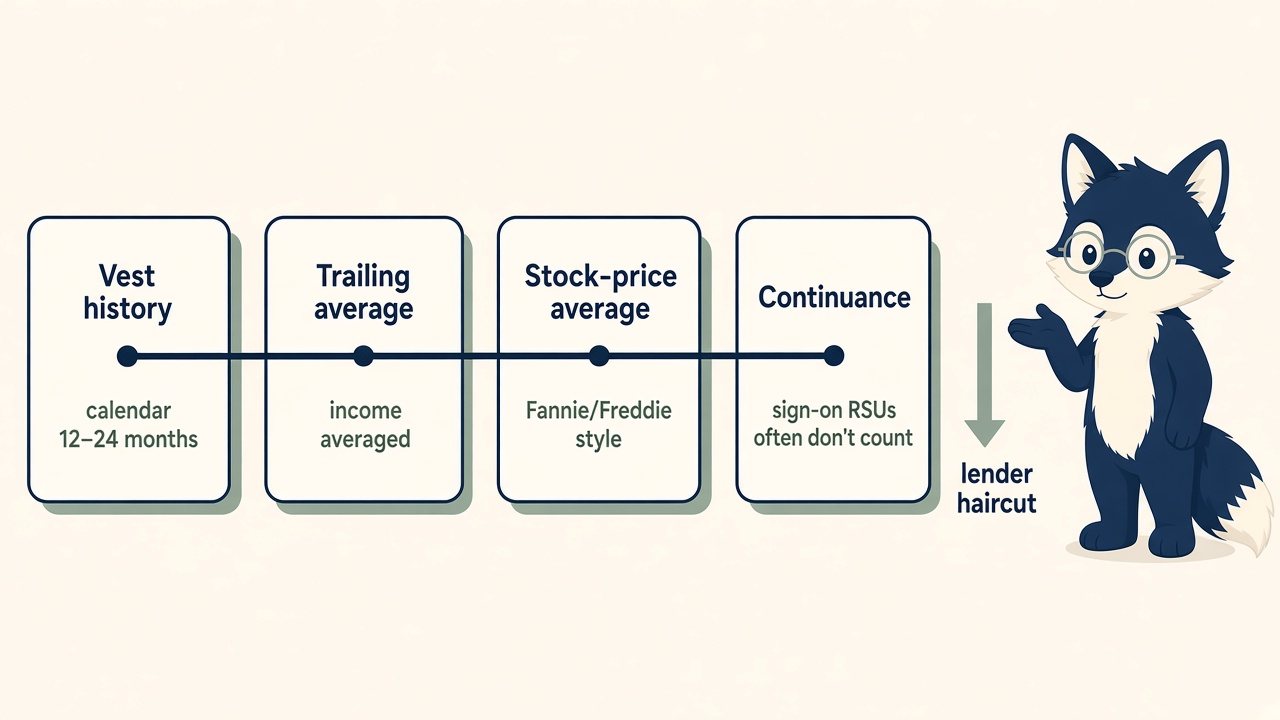
1. Vesting history they want
Guidelines treat time-based and performance-based awards differently:
- Time-based RSUs: often need about 12 months of history with your current employer.
- Performance-based RSUs: a 24-month history is commonly preferred; shorter histories (not usually under 12 months) may work with strong compensating factors, such as future vesting that looks at least as strong as the past.
Sign-on / new-hire RSUs that vest over time are often excluded from qualifying income, even if the grant looks large on paper. Brand-new grants with little vesting history are frequently treated more like a bonus that may not count yet.
2. Trailing-average math
For qualifying income, lenders typically look at what actually vested and was distributed (shares or cash equivalent), not what’s still locked.
A common approach:
- Add up vested RSU dollars (or share distributions) over the lookback window.
- Convert that to a monthly figure (e.g. last 24 months ÷ 24, or last 12 ÷ 12 depending on award type and guide).
- If your last 12 months are weaker than a longer average, many underwriters lean toward the lower run-rate.
That “take the lower figure” instinct is why the calculator on RSU Qualifier asks for both 24-month and 12-month vested dollars.
3. Stock-price averages (the haircut you feel)
When RSUs are paid in shares, agencies don’t always use yesterday’s closing price:
- Fannie Mae–style guidance often uses a 200-day moving average of the share price for share distributions.
- Freddie Mac–style guidance has used multi-week averages (historically a 52-week style average in older text; always check the current guide your lender follows).
If your stock ran up recently, the averaged price can be lower than the quote on your brokerage app. That gap is the “haircut” people feel even when the lender isn’t applying a separate percentage discount. Some lender overlays still compare trailing income to forward vesting × a conservative price (sometimes in a ~65–80% range) and take the more cautious number.
4. Continuance: will it keep coming after closing?
Underwriters care whether RSU income is likely to continue after you buy:
- One-time / non-recurring time-based awards often need documented vesting that continues for a multi-year window (commonly discussed as about three years from application).
- Recurring awards may need less special continuance work unless something suggests the income will stop.
- Performance awards may not require extra continuance verification unless the lender has reason to doubt they will continue.
If your schedule is front-loaded or mostly finished, expect a tougher conversation than someone with steady annual refreshes.
5. What to bring your lender
Typical documentation asks include:
- Recent paystub showing RSU activity and two years of W-2s (when available)
- Current vesting schedule (past and future)
- Evidence the stock is publicly traded
- Brokerage or bank statements showing prior distributions
- For share-paid income: the moving-average price method your lender uses
- Verification of employment (often including a verbal VOE)
Every shop adds overlays. Two lenders can count the same grant differently.
Estimate your number
Ready to see a rough purchase-price range from salary, bonus, and vested RSUs?
Estimate your home buying power →