 RSU Qualifier
Educational only. Not a pre-approval, offer, or commitment to lend. Your lender’s overlays may ask for more or less than this list.
Pack these before you ask a lender to count vested RSUs toward a mortgage. The goal is simple: prove the income vested, was distributed, and is likely to continue.
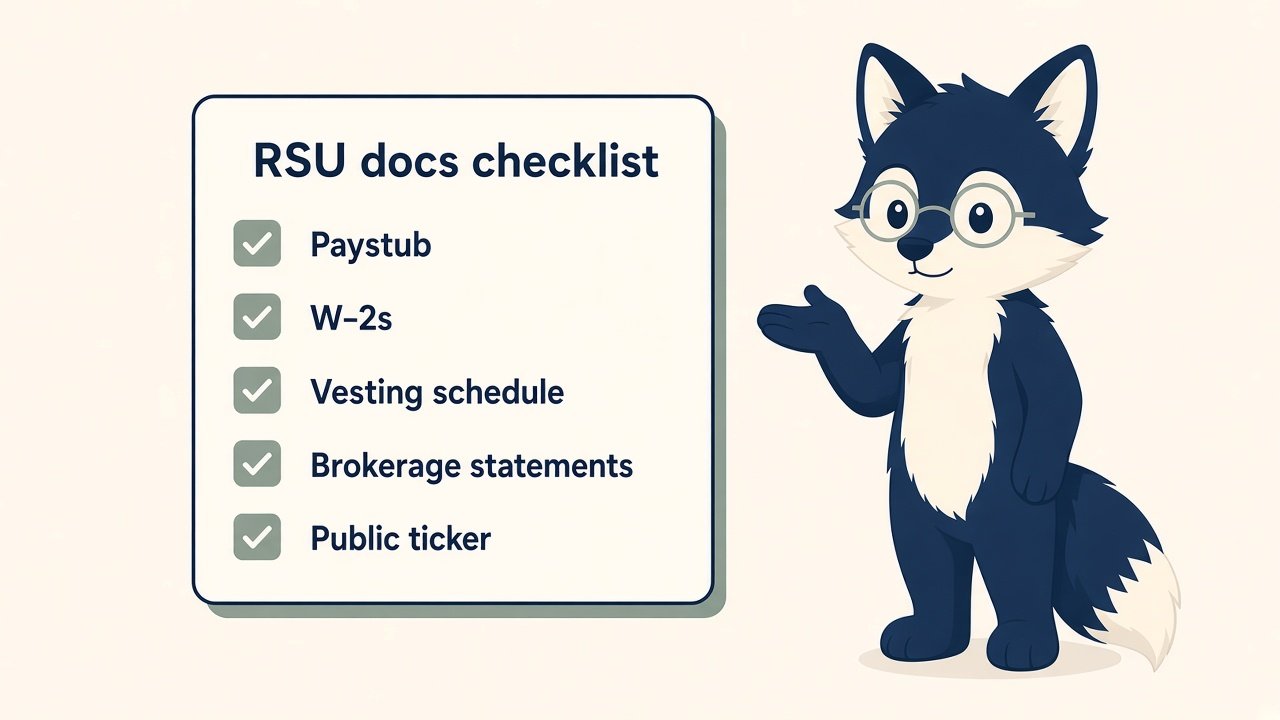
Must-haves (most loan files)
- Recent paystub showing RSU or stock activity
- Last two years of W-2s (when available)
- Current vesting schedule — past and future vest dates and share counts
- Brokerage or bank statements showing prior RSU distributions (shares or cash)
- Evidence the stock is publicly traded (ticker / exchange)
Often requested
- Printout or calc of the moving-average stock price your lender uses (Fannie-style often cites a 200-day average for share-paid income)
- Grant / award letters — especially to separate sign-on grants from refreshes
- Verification of employment (Form 1005-style and/or verbal VOE)
- YTD pay detail if W-2s don’t break out RSU clearly
Watch-outs that trip files
- Sign-on RSUs that vest over time are often excluded from qualifying income
- Thin history: time-based awards often need ~12 months; performance awards often prefer ~24 months
- Continuance: one-time schedules may need multi-year vesting still ahead; front-loaded or nearly finished grants get harder looks
- Two lenders can count the same grant differently because of overlays
How this ties to the math
Docs without the averaging rules are only half the story. Read how lenders count (and haircut) your RSUs, then estimate your number on the calculator.
Estimate your home buying power →Educational only. Talk to your lender about your specific schedule and documentation.